

In-Page Push Ads: Push Traffic With No Subscribers, Clicks Under a Cent, and the Catch

Independent and reader-supported. Some links here are affiliate links: if you sign up through them, we may earn a commission at no cost to you. It never changes our scores or verdicts. Affiliate disclosure

Contents 11
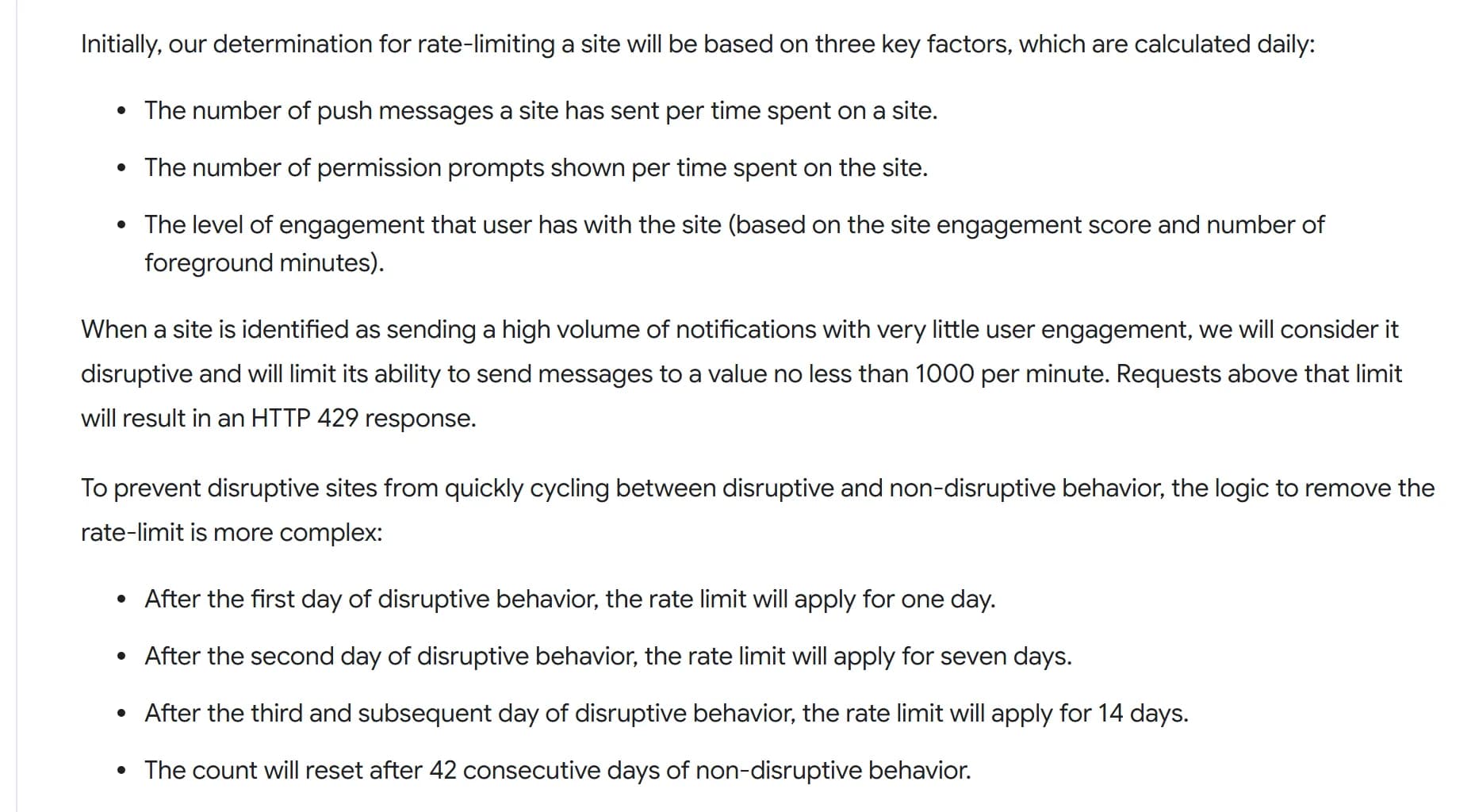
In January 2026 Chrome started rate-limiting web push. A site that sends lots of notifications nobody engages with is now capped at a rate "no less than 1000 per minute", gets HTTP 429 errors above it, and stays capped for 1 day after its first flagged day, 7 after the second and 14 after that. For ad networks that built their business on push subscription databases, it was one more hit after years of quieter permission prompts, auto-revoked permissions and iPhones that never showed the subscription prompt at all.
In-page push is how the format survived. It looks like a push notification, with an icon, a title and a line of text sliding into the corner of the screen, but it's an ad on the page the visitor is already reading: no subscription, no database, no Chrome limits. Here's what it costs in 2026, where it converts and how to launch it without feeding your budget to accidental clicks.
What in-page push is, and how it differs from classic push
It's a banner that borrows the look of a notification. The widget shows an icon, a short title and a description, appears a few seconds after the page loads (top-right on desktop, at the bottom on mobile) and links to your landing page. Networks sell it through real-time bidding, almost always on CPC. The names differ: RichAds calls it floating push, Galaksion on-page push, Kadam on-site push, and Adsterra sells it as Social Bar.
- Subscription — The user must opt in. None
- Where it shows — Notification center and lock screen, even when the site is closed. Only on an open page, during the visit
- iPhone and iPad — Only for web apps added to the Home Screen (iOS 16.4+). Any browser
- Pricing — CPC or CPM. CPC
- Chrome's 2026 rate limits — Apply. Don't apply
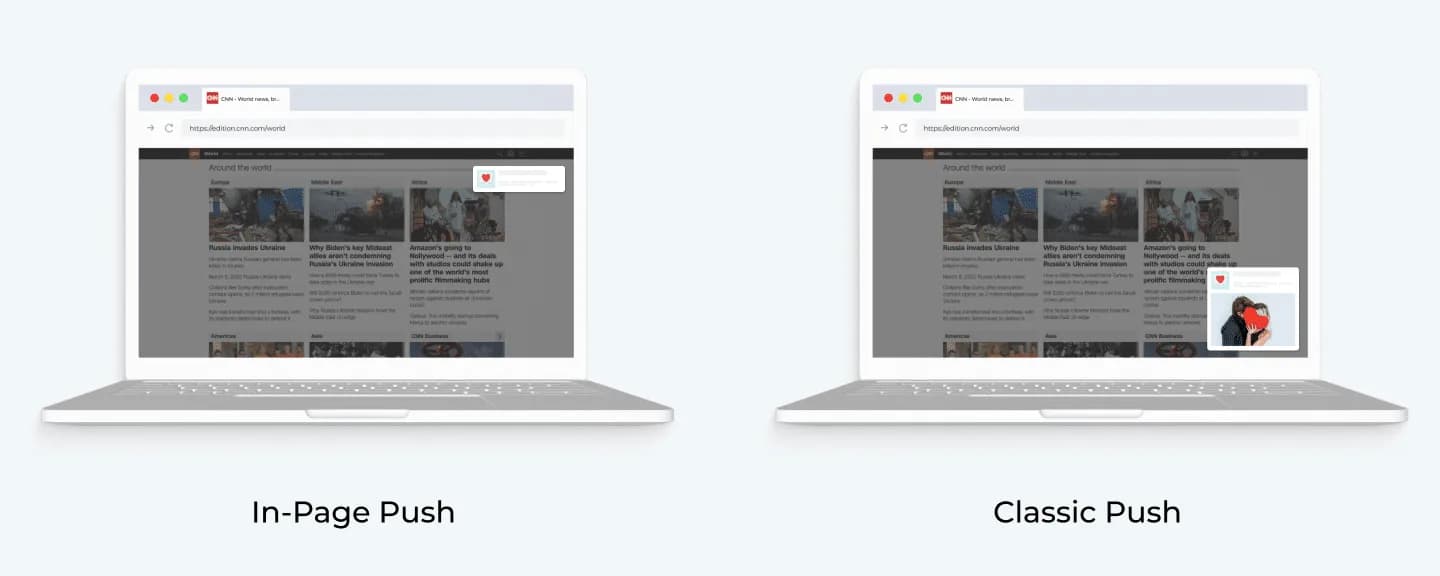
The trade-off is reach after the visit. RollerAds put it plainly in 2022: there's no need to subscribe and no way to unsubscribe, but you can't reach the user once they leave the site. Classic push lands on the lock screen and gets noticed instantly. In-page push has to win attention on a page full of other things.
Why push moved into the page
Opt-in rates collapsed first. Before Chrome 80 introduced quieter permission prompts in February 2020, only 10% of desktop and 21% of Android users granted notification permission, according to the Google research behind the change. Quiet prompts shrank the supply of fresh subscribers, and in-page push appeared the same year: Adsterra's first public in-page case ran in June 2020.
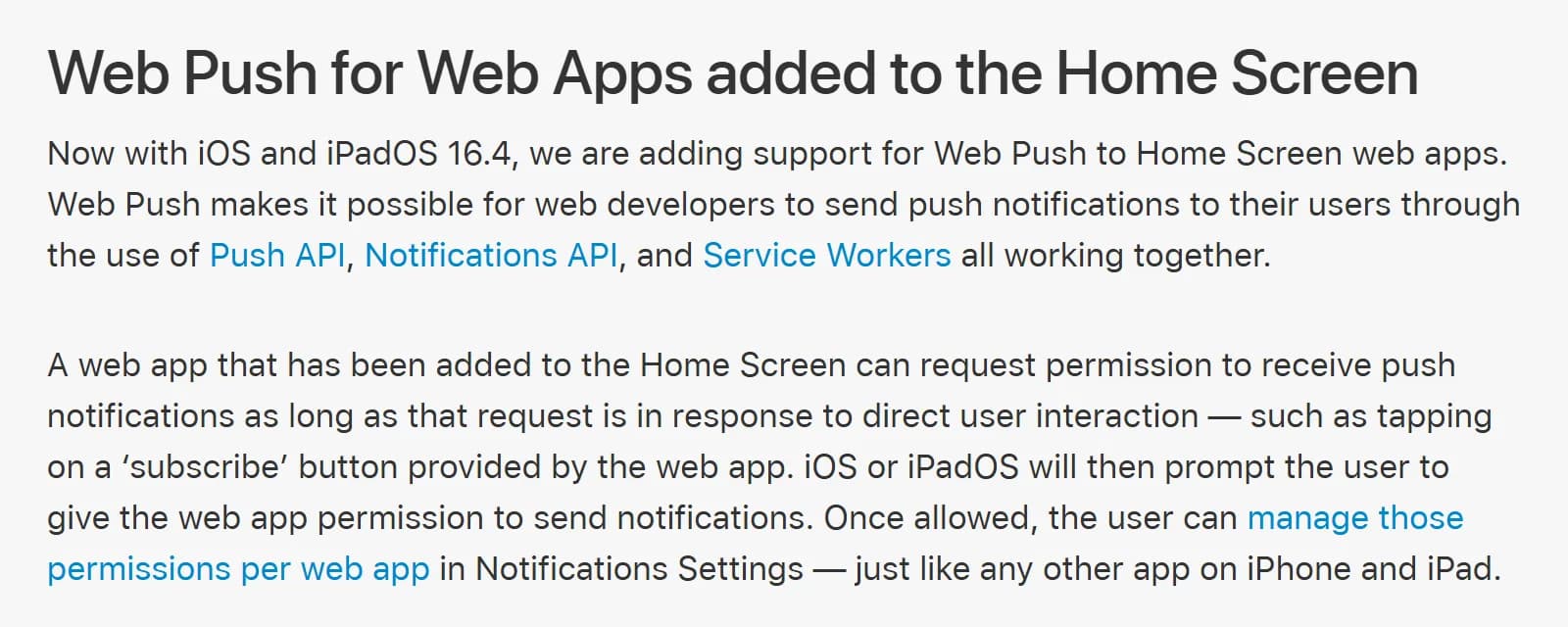
Then the platforms closed the remaining doors. Apple added web push to iOS 16.4 only for web apps saved to the Home Screen, and a site may ask for permission only after a tap, so the classic push funnel never worked in Safari on iPhone. Chrome added one-click unsubscribe on Android, automatic revocation of permissions for abusive and unused sites and, in January 2026, rate limits. The Notifications API for open tabs isn't affected, which is the space in-page push lives in.
The networks followed the traffic. Adsterra says it moved its push inventory entirely to in-page in 2024 and now sells 9.9 billion in-page impressions a month, up from 6.8 billion 2 years earlier. RichAds reports in-page volume up more than 70% since the end of 2021. Both are the networks' own figures, but every network we checked tells the same story.
What in-page push costs in 2026
Clicks are cheap, often under a cent. RichAds published its average in-page CPC by country for February 2025:
- United States — $0.0141. $0.0174
- Germany — n/a. $0.0411
- Canada — n/a. $0.0127
- France — n/a. $0.0080
- Azerbaijan — $0.0384. n/a
- Vietnam — $0.0070. $0.0047
- Serbia — $0.0060. $0.0047
- Portugal — $0.0052. n/a
- Indonesia — $0.0044. n/a
- India — $0.0026. n/a
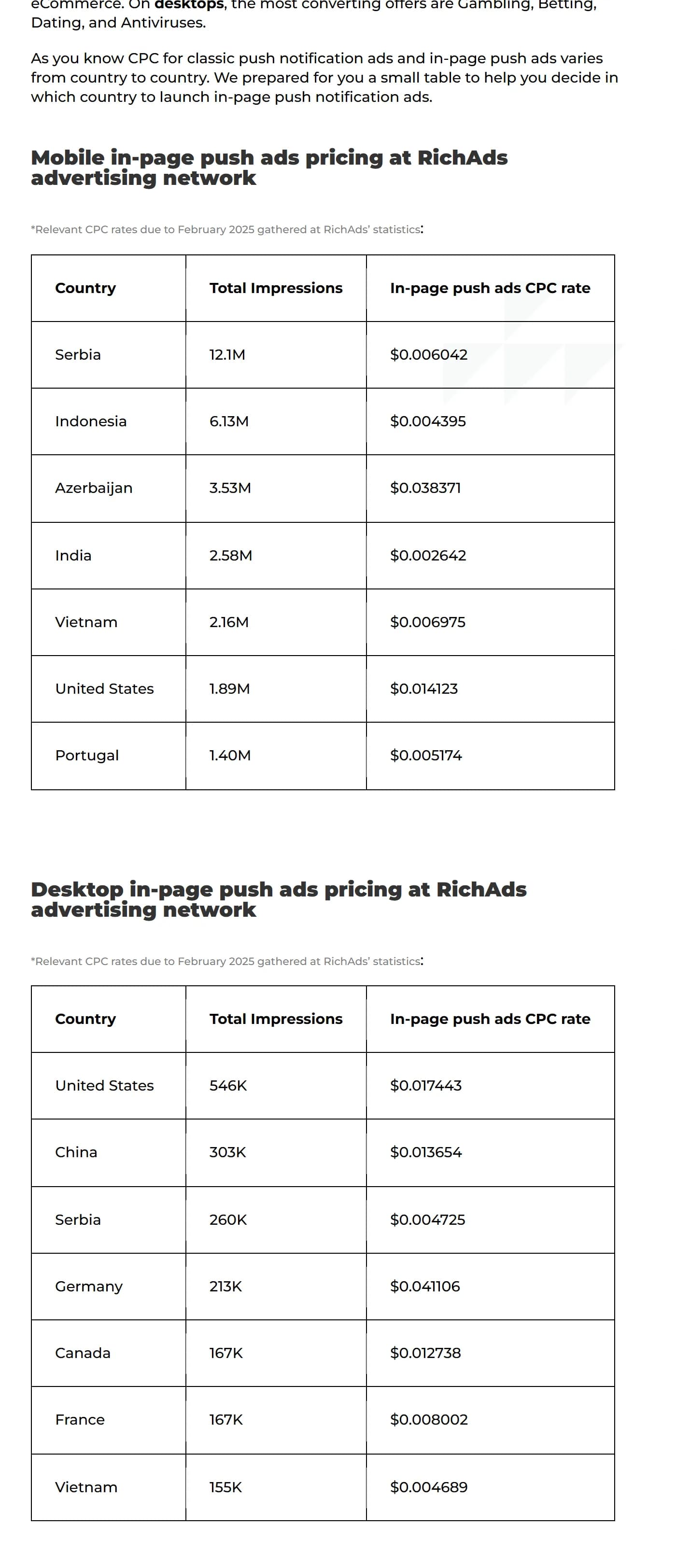
Tier-3 GEOs sell for a fraction of a cent, and even the US costs about 1.5 cents a click. A low CPC doesn't mean cheap conversions: the format pays per click, and some of those clicks are accidental taps on a widget placed exactly where a thumb lands. Price your test by the cost per conversion, not per click.
Entry deposits run from $50 to $250. Minimums from AffTank's March 2026 comparison and RichAds' own list:
- RichAds — $150. $0.005
- PropellerAds — $100. $0.005
- Adsterra — $100. $0.001
- Evadav — $100. $0.001
- Push.House — $100. $0.0001
- Clickadu — $100. $0.001
- Zeropark — $200. $0.0013
- Pushub — $200. n/a
- Traffic Nomads — $50. $0.003
RichAds also requires at least $25 a day per campaign. A bid at the floor is fine for collecting data on sources, but at the floor you mostly win the leftovers that better-paying advertisers didn't want.
Verticals that still convert on in-page push
The networks name the same handful. RichAds lists gambling, betting, antivirus and dating; PropellerAds lists iGaming, finance, sweepstakes and social; Mobidea adds nutra, e-commerce, carrier billing and lead generation. What they have in common is a one-step conversion: a registration, an install, a first deposit.
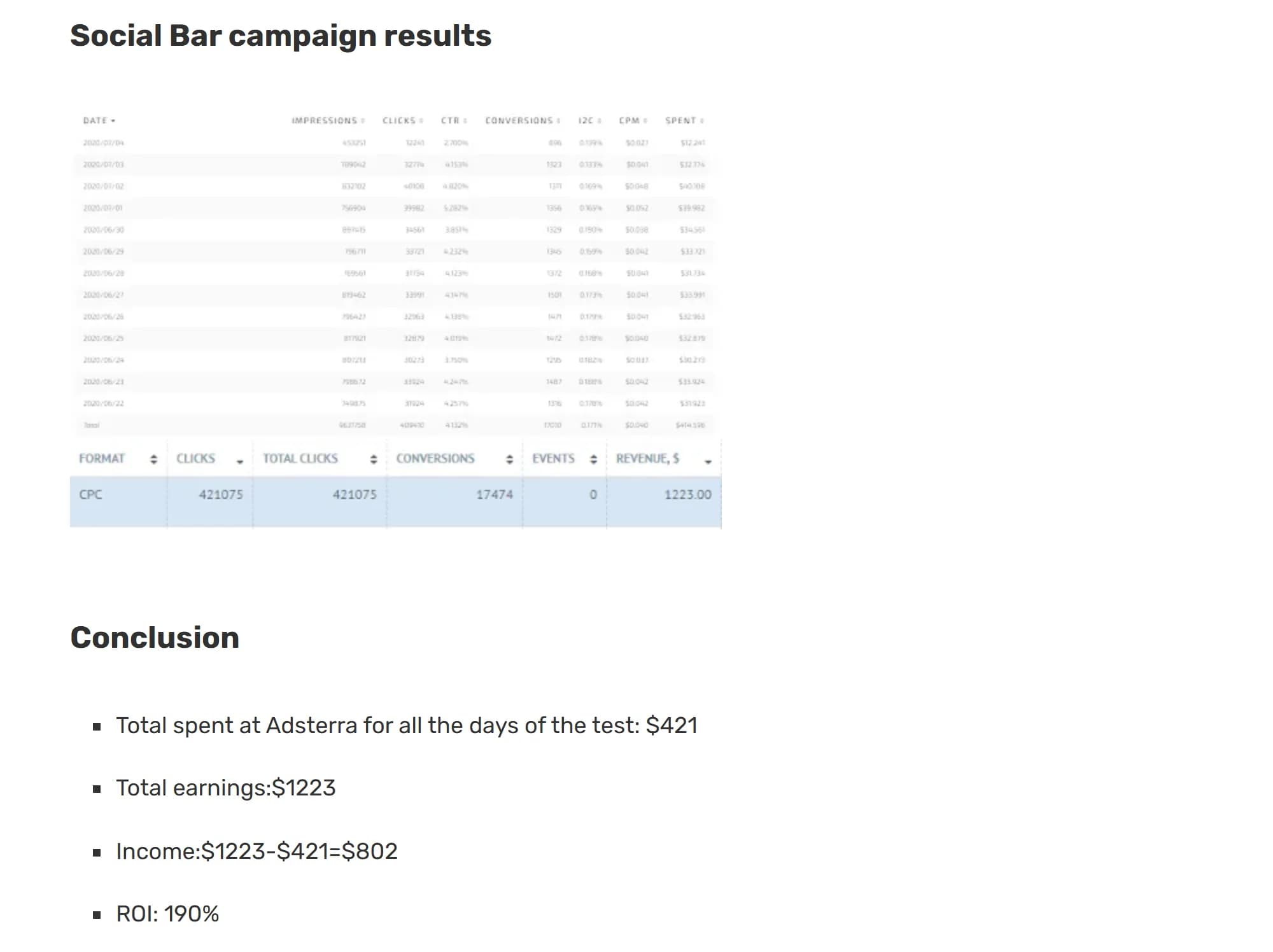
Public numbers are thin. We looked for a fully documented 2025-2026 case run on in-page push alone, with spend, revenue, CTR and conversion rate, and didn't find one. Most "in-page" cases mix it with classic push or quote an ROI without the spend. The best documented one is old: Adsterra's utility app campaign in India, run on Social Bar from June 22 to early July 2020. It bought 421,075 clicks for $421, got 17,474 installs at about $0.07 each in payouts, earned $1,223 and kept $802, a 190% ROI. The setup: a $0.001 bid, a $40 daily cap, about 10 creatives in Hindi, and old Android versions and data-center ISPs blacklisted.
An older Pushground benchmark gives in-page averages by vertical: a CTR of about 1.6% and a CPA of $1.18 for sweepstakes, 1.3% and $2.64 for adult dating, 1.2% and $5.25 for finance. Use them as a sanity check for your first test, not as a forecast: we explained why public case studies rarely match what you'll see.
In-page push creatives: specs and what gets clicked
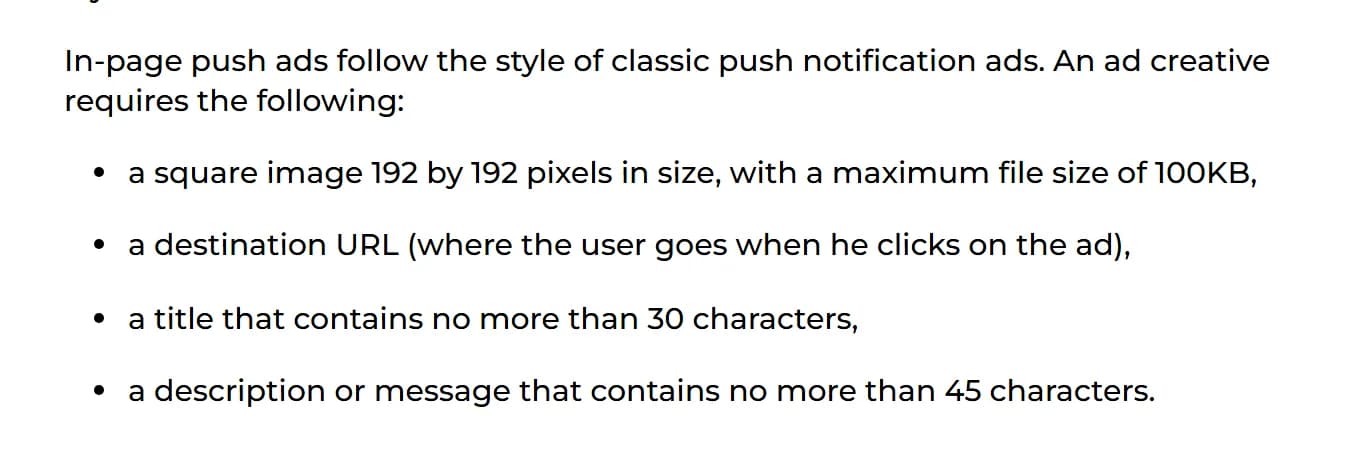
The widget is tiny, so the specs are strict. RichAds asks for a square icon of 192x192 px up to 100 KB, a title of up to 30 characters and a description of up to 45, and recommends uploading at least 5 variants. Other networks differ by a few characters, so check the cabinet before you write the copy.
- One idea per ad. 30 characters fit a question or a benefit, not both.
- An icon that reads at thumbnail size. A face or a single object works; a scene with small text doesn't.
- The local language. The Adsterra case above ran Hindi creatives in India.
- No more than 2 emojis. That's Mobidea's limit, and more starts to look like spam.
- No fake system alerts. Virus warnings and fake missed calls get rejected in moderation and teach users to close the widget.
- A landing page that keeps the promise. The click is cheap; the bounce after it is what burns the budget.
Test creatives in batches, broad first and narrow later, as in our creative testing framework.
How to launch and optimize an in-page campaign
Run in-page and classic push as separate campaigns. RichAds and PropellerAds both recommend it: the formats differ in CTR, price and audience, and mixing them hides which one earns.
Start broad, then cut. Open all sources at a modest bid, set a daily cap and a frequency cap, and let the tracker collect data by source and zone ID through a postback before you narrow anything.
Blacklist fast, whitelist by vertical. Add sources with clicks but no conversions, old OS versions and data-center ISPs to the blacklist. Pushground recommends keeping whitelists separate for each vertical, because a source that works for sweeps can be dead for dating.
Raise bids only on proven placements. Move winners into a whitelisted campaign with a higher bid, or use the network's automated rules to raise bids and pause sources against your KPI.
Recycle what already works on classic push. Pushground suggests in-page as a way to scale campaigns proven on push, and creatives that win there make a good starting set.
Where to buy in-page push traffic
These ad networks in our catalog sell in-page push, usually next to classic push and popunders:
- RichAds: push, in-page and pops, a $150 minimum deposit and $25 a day per campaign.
- PropellerAds: CPC, SmartCPC and CPA goal bidding.
- Adsterra: in-page push sold as Social Bar.
- Evadav, Push.House and Kadam: push-first networks with in-page inventory.
- Galaksion, RollerAds, Clickadu and HilltopAds: in-page next to popunder traffic.
- TwinRed, ExoClick and TrafficStars: adult-friendly networks with in-page formats.
- OctoClick: in-page, native and pops; see our OctoClick review.
If you're on the other side and own the traffic, in-page push is also one of the formats ad networks pay publishers for; we compared them in the best ad networks for website monetization. For popunder sources, see our list of popunder ad networks.
The downsides of in-page push
Less volume. In-page inventory is a fraction of what classic push used to be and thin outside the top GEOs; Mobidea's September 2026 guide lists low volume and few GEOs among the main drawbacks.
Several ads on one page. A page can show more than one in-page widget at a time, so your ad competes with other advertisers in the same corner.
It annoys people. Visitors don't control it, it shows to everyone, and fatigue sets in fast. Ad blockers still hide it.
Misclicks. A small close button produces taps you pay for and that never convert, which is the first thing to check when CTR looks great and conversions don't.
Bots. We found no fraud figures specific to in-page push. Treat it like any cheap CPC source: a tracker, an antifraud filter and a daily review of sources.
Checklist: what to do
Questions and answers
What is in-page push advertising?
It's an ad format that looks like a push notification (an icon, a title and a short text) but is shown inside the web page while the visitor is on it. There's no subscription, and networks sell it on CPC through real-time bidding.
What is the difference between in-page push and web push?
Classic web push needs the user to subscribe and reaches them in the notification center even after they leave the site. In-page push needs no subscription but shows only during the visit. It also works on iPhones, where web push is limited to web apps added to the Home Screen.
Does in-page push work on iPhone?
Yes. It's an element of the page, not a system notification, so it shows in Safari and any other browser on iOS. Classic web push on iOS 16.4+ works only for web apps saved to the Home Screen, after the user taps to allow it.
How much does in-page push traffic cost?
RichAds' February 2025 averages ran from about $0.003 a click in India to $0.04 in Germany, with the US at $0.014-0.017. Minimum deposits are $50-$250 depending on the network, and minimum bids start from $0.0001-0.005.
Which verticals work best on in-page push?
Networks name gambling, betting, sweepstakes, dating, finance and utilities such as antivirus and VPN apps: offers with a one-step conversion like a registration, an install or a first deposit.
Do Chrome's 2026 push limits affect in-page push?
No. Chrome's rate limits apply to the Push API, which delivers notifications to subscribers. In-page push uses no subscription and no Push API: it's rendered by the page itself.
Author’s conclusion
In-page push isn't a new channel so much as the part of push that browsers couldn't regulate away. You lose the subscriber base and the lock screen, and you get a cheap CPC format that works everywhere, iPhones included, with volumes the networks say are still growing.
My advice: treat in-page push as a testing ground, not a goldmine. Start at the minimum deposit with 5 creatives, a separate campaign for each format and a tracker on every zone ID, and judge it by the cost per conversion after the first $100-$150, not by how cheap the clicks look.
Lu Discover, Editor-in-chief
Sources for this article
- developer.chrome.com — Chrome for Developers: Push API rate limits (January 6, 2026; disruptive sites limited to no less than 1,000 messages per minute, HTTP 429, limits of 1, 7 and 14 days)
- webkit.org — WebKit: Web Push for Web Apps on iOS and iPadOS (iOS 16.4, Home Screen web apps, permission after user interaction)
- research.google — Google Research: Shhhh...be quiet! Reducing the unwanted interruptions of notification permission prompts on Chrome (grant rates before quiet prompts)
- adsterra.com — Adsterra: Web push vs in-page push (move to in-page in 2024; 9.9 billion monthly impressions)
- adsterra.com — Adsterra: utility offer on in-page push in India, case study (June-July 2020; $421 spend, $1,223 revenue, ROI 190%)
- richads.com — RichAds: In-page push ads costs (average CPC by country, February 2025)
- richads.com — RichAds: In-page push traffic (creative specs, best practices, volume growth since 2021)
- richads.com — RichAds: Top push ad networks with cheap traffic (updated September 29, 2026; minimum deposits)
- afftank.com — AffTank: push notification ad networks (March 9, 2026; minimum deposits and CPC bids)
- blog.rollerads.com — RollerAds: Difference between classic push and in-page push (January 31, 2022)
- mobidea.com — Mobidea Academy: In-page push ads (September 14, 2026; verticals, emoji limit, downsides)
- propellerads.com — PropellerAds: everything you need to know about in-page push ads (verticals, GEOs, bidding models)
- pushground.com — Pushground: In-page push ads complete guide (CTR and CPA by vertical, whitelists by vertical, misclicks)
Companies in this article
- RichAdsTraffic sourceNot rated yet
- PropellerAdsTraffic sourceNot rated yet
- AdsterraTraffic sourceNot rated yet
- EvadavTraffic sourceNot rated yet
- Push.HouseTraffic sourceNot rated yet
- KadamTraffic sourceNot rated yet
- GalaksionTraffic sourceNot rated yet
- RollerAdsTraffic sourceNot rated yet
- ClickaduTraffic sourceNot rated yet
- HilltopAdsTraffic sourceNot rated yet
- TwinRedTraffic sourceNot rated yet
- ExoClickTraffic sourceNot rated yet
- TrafficStarsTraffic sourceNot rated yet
- OctoClickTraffic sourceNot rated yet














Related stories
 Comparison
Best Ad Networks for Website Monetization in 2026: Who Takes 1,000 Visits, Who Wants 250K, Who Pays Weekly
 Case fact-check
AI Dating on HilltopAds at a $39.91 CPA: Fact-Checking the Network's Own Case
 Analysis
Comments
0 commentsNo comments yet.
Add a comment