
How Affiliate Commissions Are Tracked and Paid in 2027: Clicks, Cookies, Postbacks and Why Sales Go Missing

Independent and reader-supported. Some links here are affiliate links: if you sign up through them, we may earn a commission at no cost to you. It never changes our scores or verdicts. Affiliate disclosure
Contents 10
You sent the click, the reader bought, and the dashboard still shows 0. Or it shows the sale, and the money comes 3 months later, minus a refund you never heard about. Both are normal, and both are written into the rules of every affiliate program, in places few affiliates read.
This guide follows 1 commission from the click to your bank: how the program knows the sale is yours, how long it waits, who can take it from you, and when it pays. The rules come from the programs' own pages: Amazon Associates, eBay Partner Network, Awin, CJ, ClickBank and Shopify, checked on November 25, 2026.
Part of our paid traffic series: paid traffic sources for affiliate marketing, TikTok Ads for affiliate marketing and how much budget you need to test an offer.
Step | What happens | Where it breaks |
|---|---|---|
1. Click | Your link records who sent the visitor | Safari, a later click, another device |
2. Sale | The merchant reports the order to the network | Pixel blocked, postback set up wrong |
3. Approval | The merchant approves or rejects it | Refunds, fraud checks, rejected leads |
4. Payment | The network pays on its schedule | Thresholds, reserves, waiting periods |
From click to cash: the 4 steps of a commission
Step 1: the click. Your affiliate link is a tracking link with your ID in it. When someone clicks, the program saves that ID: in a cookie in the visitor's browser, in its own database with a click ID, or both.
Step 2: the sale. When the visitor buys, the merchant's site reports the order to the network and matches it to your ID. If the click is still inside the program's window and no other affiliate clicked after you, the sale is yours. On networks it now shows as pending.
Step 3: approval. The merchant checks the order: was it paid, returned, a fraud, a duplicate? On Awin, "the advertiser reviews the transaction and either approves or denies it". Until then, your commission is a promise.
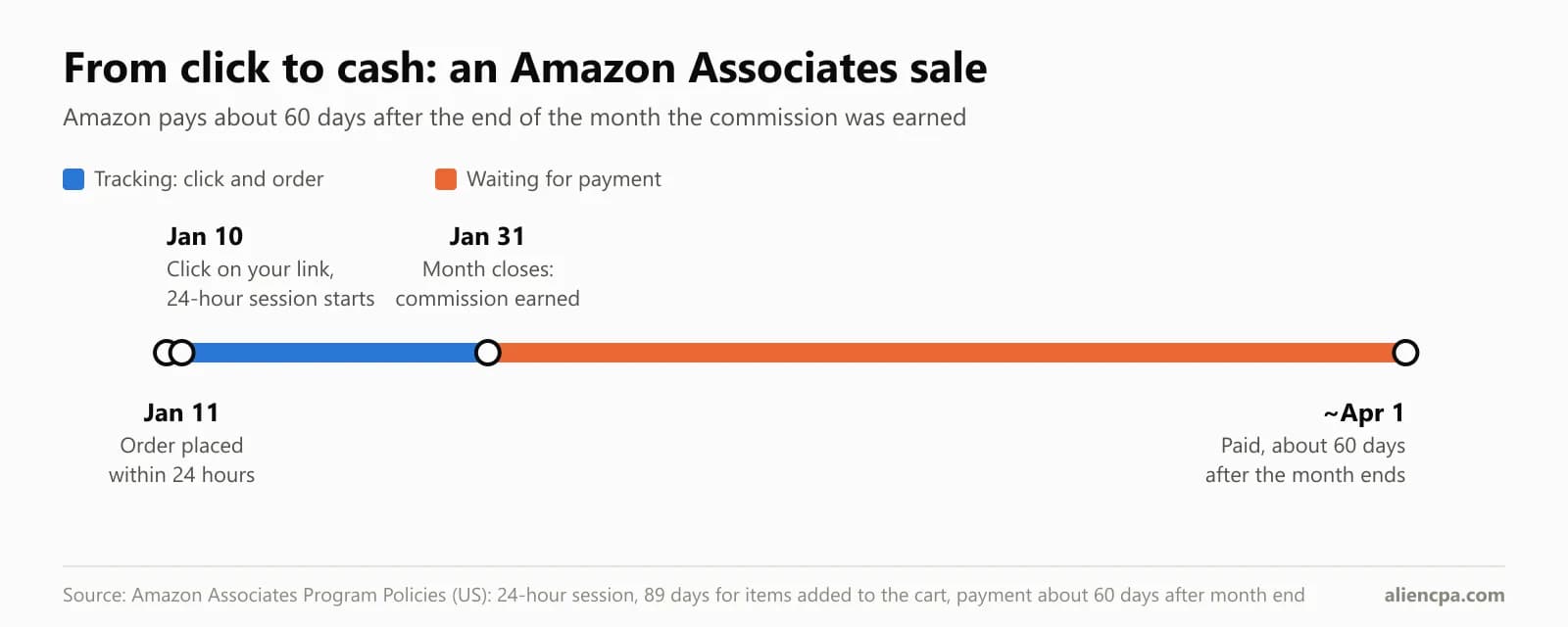
Step 4: payment. Approved commissions wait for the network's payment day and for your balance to reach the threshold. Amazon's own timeline shows how far apart the steps are.
The cookie window: how long a click counts
The cookie window is the time after the click during which a sale still counts as yours. The program sets it, and it differs a lot:
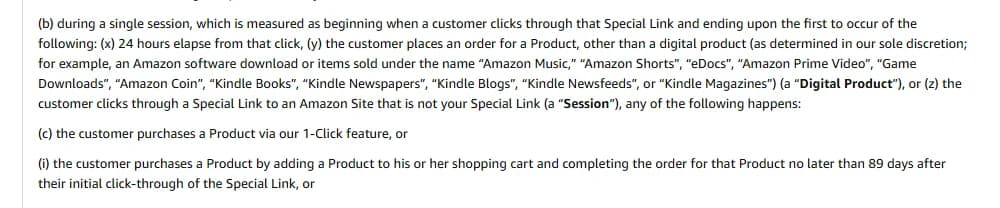
- Amazon Associates US: a session of 24 hours from the click. Items the visitor adds to the cart in that session still count if the order is completed "no later than 89 days after their initial click-through".
- eBay Partner Network: a cookie that "credits your link with their activity for 24 hours", for any qualified purchase, not only the item you linked to.
- Awin: "Industry standard is 30 days, but durations may vary by program." Each program shows its own in the account.
- Shopify Affiliate Program: 30 days to sign up, and a store on a free trial is tracked up to 400 days until it pays, as we found in our review of the Shopify Affiliate Program.
What a 30-day cookie window means in practice: if the reader clicks today and buys within 30 days, from the same browser, without clicking anyone else's link, you get the commission. Each of those 3 conditions can fail, and the next sections show how. More on the term in our glossary entry for cookie window.
Last click wins: why another link can take your sale
Most programs pay the last affiliate who sent the buyer. eBay states it plainly: "the last affiliate link a user clicks before making a purchase is the one that gets the credit". Amazon ends your session when the customer "clicks through a Special Link to an Amazon Site that is not your Special Link". This is last-click attribution, and it means a long cookie window protects you only until someone else's click.
That someone can be a browser extension. In a US class action, content creators, including YouTubers, allege that PayPal's Honey extension loaded a hidden tab at checkout to "overwrite the existing Affiliate ID with Honey's own Affiliate ID". On June 22, 2026, the court in *Wendover Productions v. PayPal* (Case No. 5:24-cv-09470-BLF) denied PayPal's motion to dismiss the amended complaint. These are allegations at an early stage, not findings, but they show how cookie stuffing works: whoever writes the cookie last gets paid.
Coupon and cashback sites work the same way, legally. If the merchant lets them, a visitor who reads your review and then looks for a code clicks their link last. Read the program's rules on coupon sites before you choose a merchant for a review site.
Cookies vs postbacks: how tracking actually works
Browser tracking relies on a cookie or a pixel. The click writes a cookie, and on the thank-you page a pixel reads it and reports the sale. It's simple to set up and the most fragile: it needs the same browser and a cookie that survived.
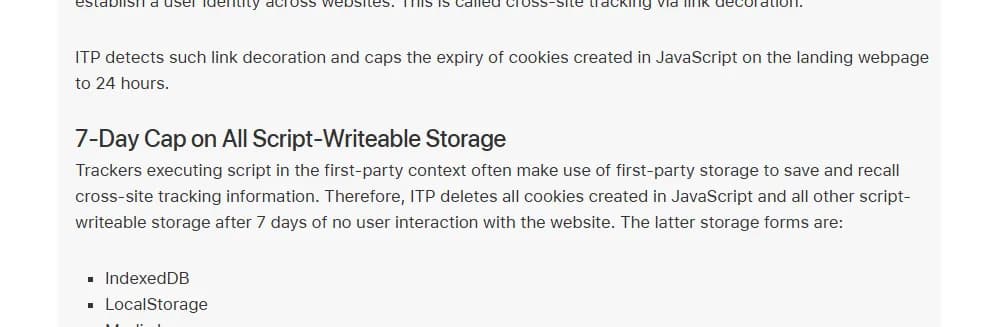
Safari is the main reason cookies don't survive. WebKit's tracking prevention caps cookies set by page scripts after a click from a tracking link "to 24 hours", and deletes all script-set cookies and storage "after 7 days of no user interaction with the website". A reader who clicks on an iPhone and buys on day 8 may simply not be yours anymore.
Chrome kept third-party cookies, but that doesn't fix Safari. In April 2025 Google dropped its plan to ask every Chrome user about third-party cookies:
we've made the decision to maintain our current approach to offering users third-party cookie choice in Chrome, and will not be rolling out a new standalone prompt for third-party cookies.
Server-to-server tracking doesn't depend on the browser. The network stores the click on its server with a click ID and passes it to the merchant in the link. When the order comes in, the merchant's server sends the click ID back: that's a postback. Keitaro's documentation defines it as "an HTTP request sent from the advertiser's server (affiliate network or own website) to the tracker server to report that a conversion has occurred".
For media buyers the postback is the whole game. Your tracker gives every click its own ID, you pass it to the network in a sub ID, and the network's postback returns it with the conversion. Keitaro's docs warn: "Without subid and status, the tracker cannot correctly process the postback." Without that, you can't see which ad, placement or creative made the sale, and you optimize blind. The setup for Keitaro and other trackers is in our trackers section.
Approval and holds: why a commission can be cancelled
Pending is not earned. Every program keeps the right to reject a sale before it pays. The reasons are in its terms, and they're mostly the same.
Returns and refunds. Amazon excludes "any Product order where a cancellation, return, or refund has been initiated". In e-commerce, a reader who returns the product takes your commission with them.
Paid search on the brand. Amazon also excludes sales from ads you bought by bidding on its trademarks, a "Prohibited Paid Search Placement". Many programs have a similar clause on brand bidding, and such a sale is simply not paid.
Lead quality in CPA. In CPA verticals like nutra, finance and sweepstakes, the merchant pays only for leads it accepts: a confirmed order, a verified sign-up, a first deposit. The share it accepts is your approval rate, and the waiting time before it decides is a hold.
How long the review takes. Awin says "the average approval time for transactions is 30-45 days", and hotels confirm only after the stay. On CJ, a commission locks around the 10th of the month after the sale, and the advertiser can extend that by 1 more pay period. After locking, it can no longer be edited.
Some money is held back even after approval. ClickBank "withholds a fraction of the revenue earned during each pay period", 10% as standard, and releases it "after 12 weeks (about 84 days)" to cover late refunds and chargebacks. Plan your cash flow on 90% of the dashboard number.
When numbers look too low, ask before you blame. Under-reporting by the network or merchant is called shaving, and it's real, but most gaps come from the reasons above. Compare your tracker's clicks with the network's, check the postback log, then ask the affiliate manager for the rejection reasons.
When the money arrives
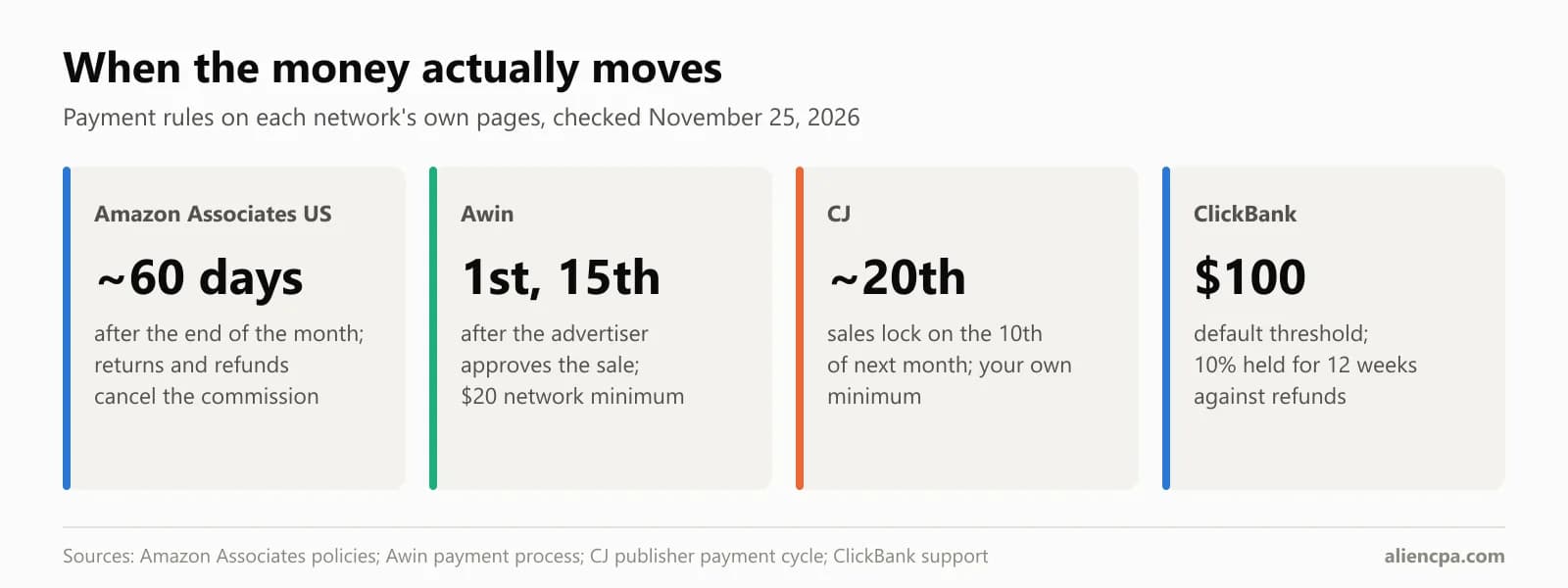
Each program pays on its own clock. Amazon pays "approximately 60 days following the end of each calendar month in which they were earned". Awin pays on "either the 1st or the 15th" after the advertiser has paid Awin, with a network minimum of $20. CJ pays "around the 20th (for all currencies) and around the 28th (for currencies USD, GBP, or EUR)", once your balance reaches the minimum you set. ClickBank's "default payment threshold is $100", adjustable from $10.
Trials stretch it further. In Shopify's own example, a merchant starts a free trial on January 1, pays the first full-price month on April 5, and the commission lands in Impact on May 22: almost 5 months from sign-up to money.
So the money you spend on ads today comes back in 1-5 months. If you buy traffic, count that gap into your budget: a profitable test still needs cash for the next one before the first payout arrives.
Why sales go missing: 8 things to check
- The link isn't yours. A copied link without your ID, a shortener that strips parameters, a redirect that drops them.
- The window closed. The reader bought on day 31 of a 30-day window, or on day 2 of Amazon's 24 hours without a cart item.
- Someone clicked after you. Another affiliate, a coupon site or an extension at checkout.
- Safari trimmed the cookie. A click on an iPhone, a purchase days later.
- Another device. A click on the phone, a purchase on the laptop: the laptop has no cookie.
- The postback isn't set up right. No sub ID passed, the wrong status, a wrong URL in the network panel.
- The order was rejected. Refund, cancellation, fraud check, a lead that didn't confirm.
- The rules were broken. Brand bidding, incentivized traffic or a source the program forbids: the sale is excluded.
Checklist: what to do
Questions and answers
How do affiliate commissions work?
You get a link with your ID. When a visitor clicks and buys within the program's window, the merchant reports the sale, approves it after a review period, and the network pays you on its schedule once your balance passes the threshold.
How are affiliate sales tracked?
Either in the browser, with a cookie set on the click and a pixel on the merchant's thank-you page, or server-to-server, with a click ID that the merchant's server sends back in a postback. Server-to-server tracking survives cookie limits; browser tracking is easier to set up.
What does a 30-day cookie window mean?
A sale counts as yours if the visitor buys within 30 days of clicking your link, in the same browser, and without clicking another affiliate's link after yours. Amazon US uses a 24-hour session instead.
How much do affiliates get paid in commission?
It depends on the program and the model: a percentage of the sale in retail programs, a fixed amount per lead, sale or deposit in CPA, or a share of revenue in RevShare. The program's terms and the offer page list the rate, which can differ by product and country.
How do I track my affiliate links?
Use the program's sub ID parameter to label each page, ad or placement, and send traffic through a tracker that records clicks and receives conversions by postback. Then compare the tracker's numbers with the network's report.
When do affiliates get paid?
On each network's schedule: Amazon about 60 days after the end of the month, Awin on the 1st or 15th after approval, CJ around the 20th or 28th, ClickBank once your balance passes the threshold you set. Holds, refunds and trials can add weeks or months.
Author’s conclusion
A commission passes 4 checkpoints: the click, the sale, the merchant's approval and the payment. The first 2 depend on tracking: cookie windows from Amazon's 24-hour session to Awin's 30-day industry standard, last-click rules that hand the sale to whoever clicked after you, and Safari's 24-hour and 7-day limits. The last 2 depend on the merchant: refunds and rejections cancel commissions, and payment comes weeks or months later.
My advice: track every click on your own side and compare it with the network's numbers. A tracker with postbacks and sub IDs tells you which traffic made money, and the network's terms tell you why some of it never will. Read both before you spend.
Lu Discover, Editor-in-chief
Sources for this article
- affiliate-program.amazon.com — Amazon Associates Program Policies (US): 24-hour session, 89 days for cart items, payment about 60 days after month end, excluded orders, Prohibited Paid Search Placement
- partnernetwork.ebay.com — Understanding cookies, commissions and getting paid: 24-hour cookie, last-click methodology
- help.awin.com — Understanding cookies in affiliate marketing: "Industry standard is 30 days"
- awin.com — Understanding the payment process: approval 30-45 days, payment on the 1st or 15th, $20 minimum
- junction.cj.com — Cookie Dough: understanding the publisher payment cycle: locking, payment around the 20th and 28th
- support.clickbank.com — How do I edit my payment threshold: $100 default, $10 to $1,000,000
- support.clickbank.com — How is my payment amount determined: 10% return allowance, released after 12 weeks
- webkit.org — Tracking Prevention in WebKit: 24-hour cap after link decoration, 7-day cap on script-writeable storage
- privacysandbox.google.com — Anthony Chavez, Next steps for Privacy Sandbox and tracking protections in Chrome, April 22, 2025
- docs.keitaro.io — Postback: definition, required subid and status
- US District Court, N.D. California — Wendover Productions v. PayPal, Case No. 5:24-cv-09470-BLF, Order Denying Motion to Dismiss Second Amended Complaint, June 22, 2026 (court order PDF published by plaintiffs' counsel)
- aliencpa — Shopify Affiliate Program review: 30-day cookie, 400 days for free trials, payment timeline example
Companies in this article
- Shopify Affiliate ProgramAffiliate networkNot rated yet
- KeitaroTracker4.5
- Amazon AssociatesAffiliate network1.1
- ClickBankAffiliate network2.9
Related stories
 Guide
Best Affiliate Marketing Courses 2026: Free and Paid Courses, Checked Against Their Own Fine Print
 Case fact-check
Random Olive's October 2026 Income Report, Fact-Checked: $2,397, 95% From Affiliate Links
 Analysis
Comments
0 commentsNo comments yet.
Add a comment