

Accept Payments Without a Business: 4 Routes That Work, and Why One Word Can Cut Off a Skincare Store

Contents 9
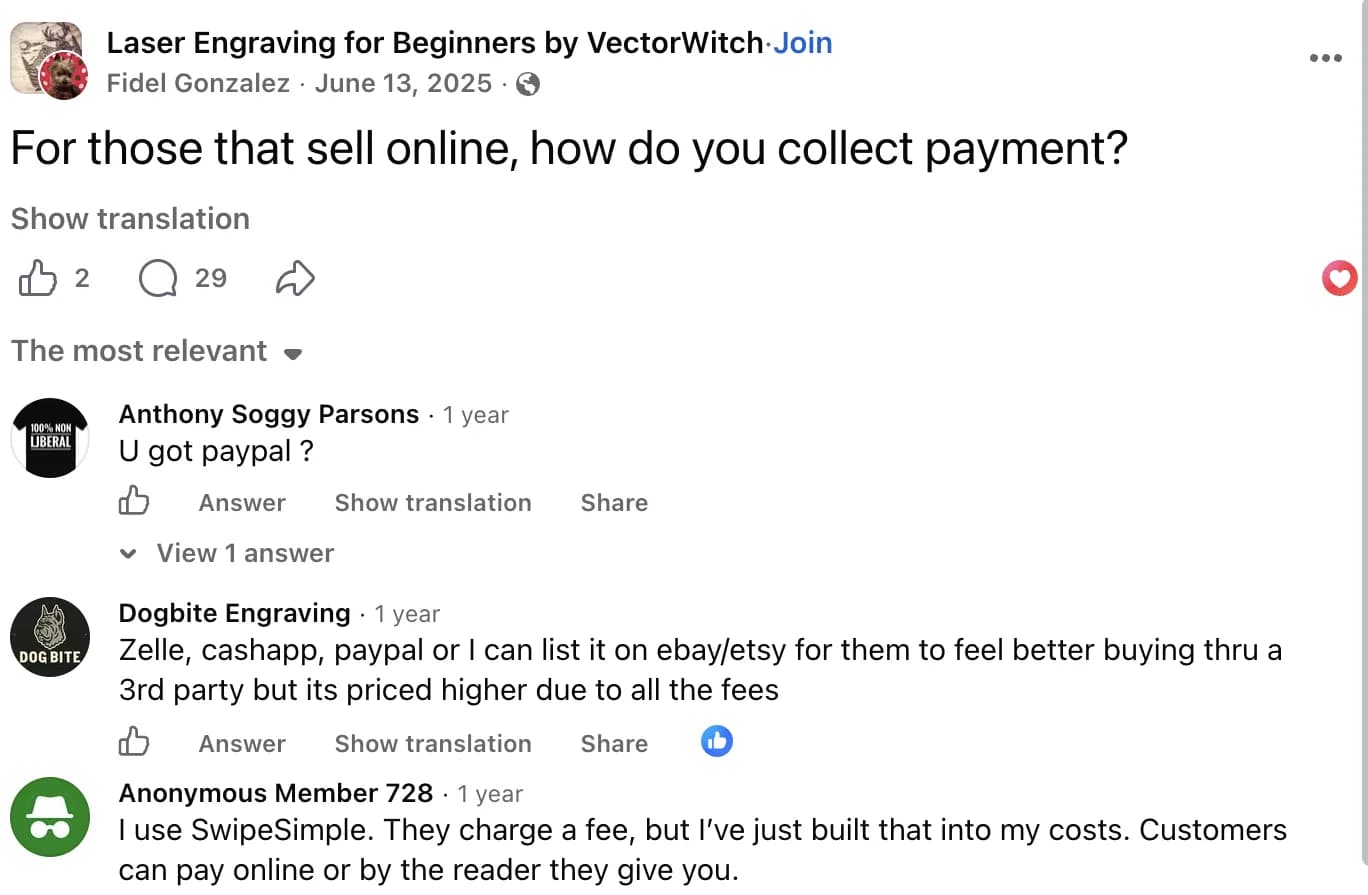
"Online sellers with no website - how do you accept payments?" That was the whole post in r/smallbusiness on February 13, 2026. A few months earlier, someone in r/ecommerce who wanted to start selling asked a blunter version: "How does the money part even work?" The same question turns up in hobby groups too. In June 2025 a laser engraving group on Facebook asked it directly and got 29 replies:
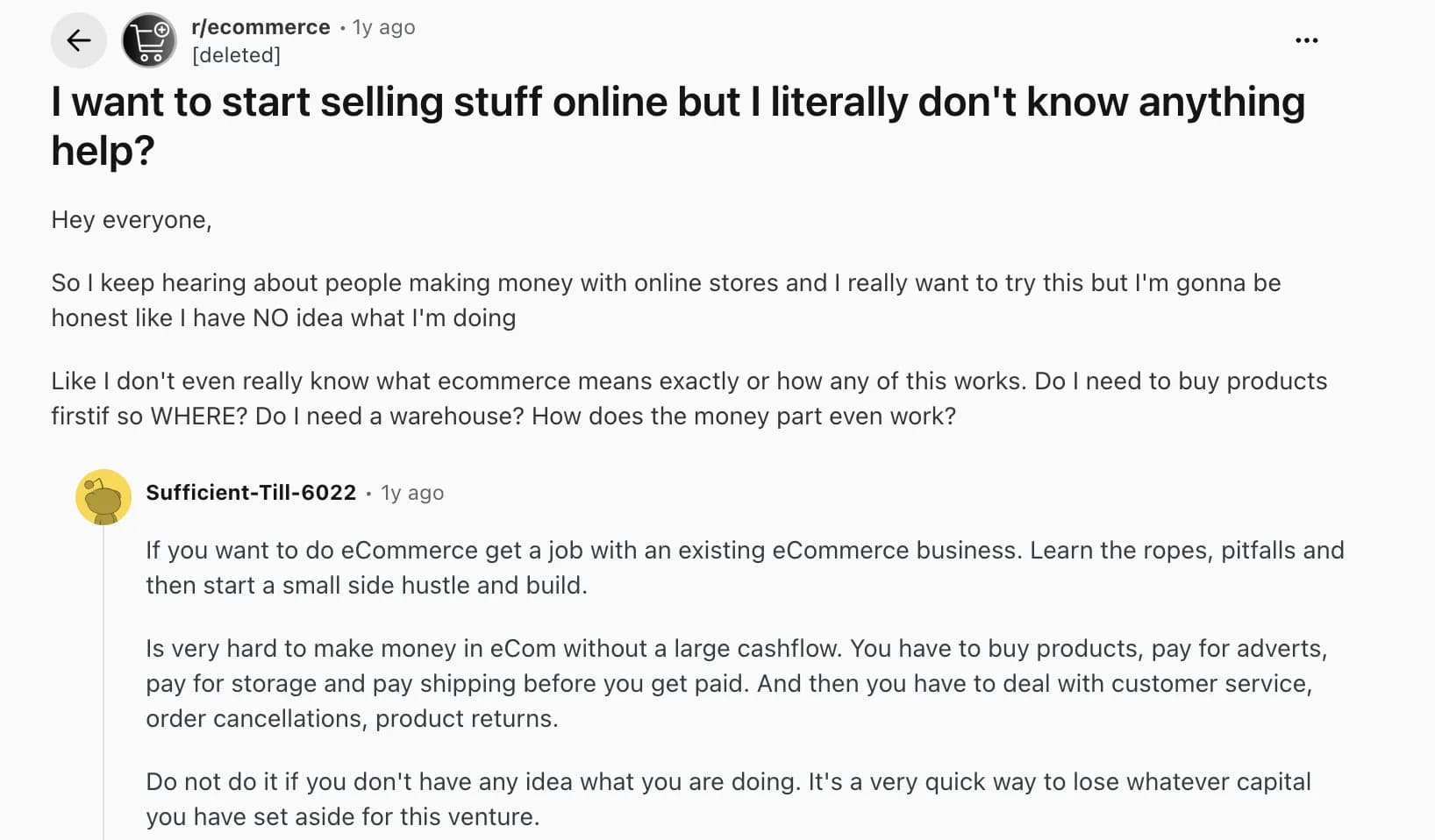
It's also the first wall an affiliate hits when they want to cut out the network and the advertiser and sell their own product. In our guide to high risk merchant accounts I described the loop a colleague hit: to earn your first $1 you need to take a card payment, to take card payments you need a company, and to open a company you need money you can't earn yet. A reply in that r/ecommerce thread described the money side of the same squeeze:
The good news is that the loop has more exits than it looks. Below: what you can open without a company, the 4 routes small sellers actually use, what each one refuses, and why skincare and supplements get cut off even with every document in place.
Can you accept card payments without a business?
Yes, with conditions. Stripe's own onboarding has a business type called individual: "Collect information about the person." For the US it defines a sole proprietorship as "a business that isn't a separate legal entity from its individual owner." What Stripe still needs is you: your name, date of birth, address and bank account, and sometimes "a scan of a valid government-issued ID, a proof of address document, or both."
Shopify Payments asks that your business is in a supported country, that your products aren't prohibited, and that you're "at least 18 years old to set up a Shopify Payments account." PayPal separates personal accounts, for "personal payments for shared expenses," from business accounts that "accept debit card, credit card, and bank account payments for a low fee."
One popular option is off the table for new sellers. Wise is a multi-currency account first, and its card acceptance page now says:

So "no company" isn't the blocker. The blockers are what you sell and how you describe it, and we'll get to both.
4 routes small sellers actually use
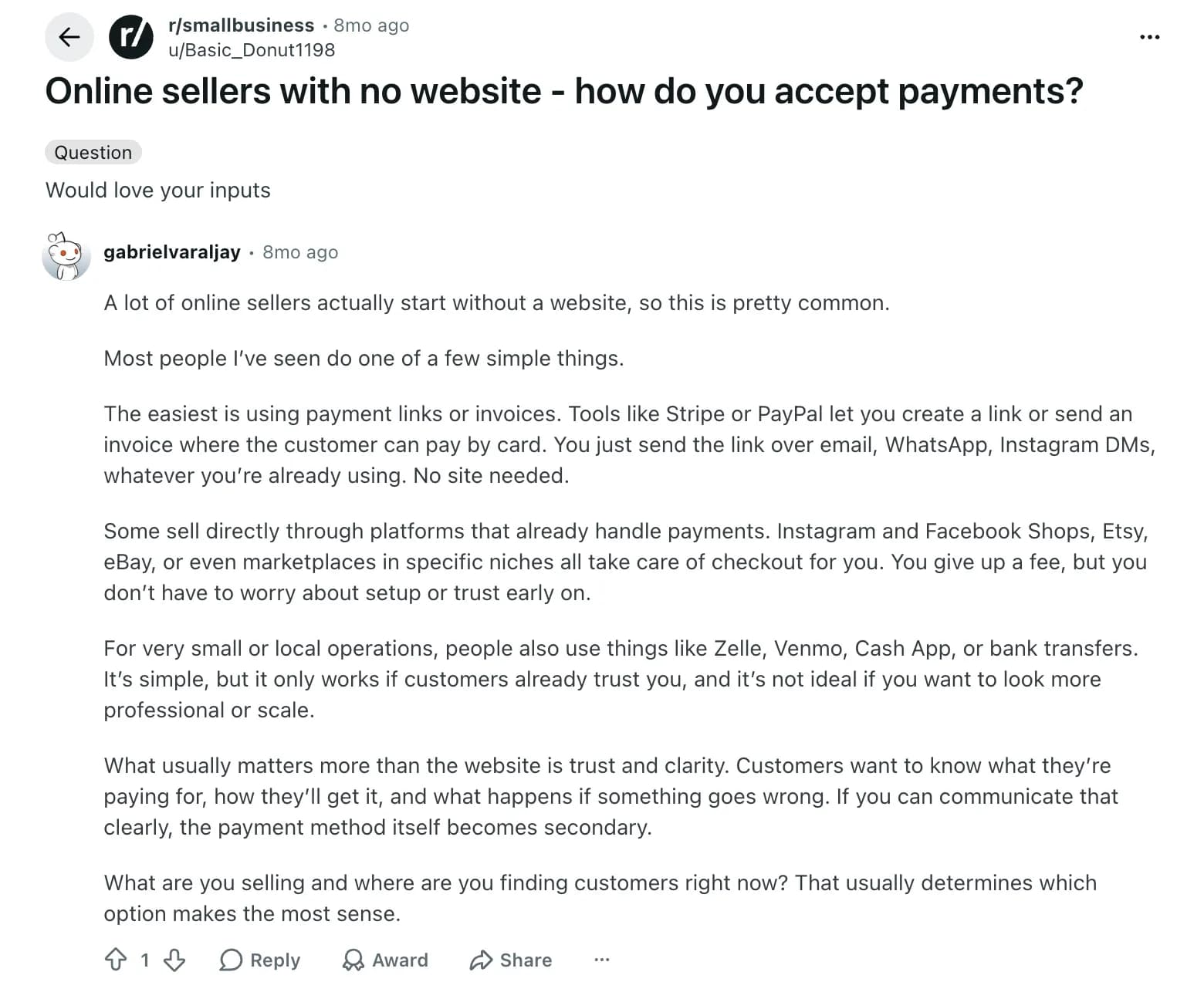
The r/smallbusiness thread got a good answer from one commenter: payment links or invoices, platforms that "already handle payments," and for "very small or local operations" Zelle, Venmo, Cash App or bank transfers, which "only works if customers already trust you":
Here's the same map with the catch on each:
- Payment facilitator as an individual (Stripe, PayPal, Square, Shopify Payments). Fits: Products clear of their prohibited lists. What you need: ID, address, bank account, supported country. The catch: Fast yes, review later; closures and fund holds if software flags you.
- Payment links and invoices. Fits: Selling through DMs, email or social, with no site. What you need: The same account as above. The catch: Same rules as the processor behind the link.
- Marketplace (Etsy, eBay, Amazon). Fits: Physical goods that pass category rules. What you need: A seller account. The catch: Fees, the marketplace's rules, and its customer, not yours.
- Merchant of record (Paddle, Lemon Squeezy, Polar, Dodo). Fits: Software, courses, digital downloads. What you need: An account; no company in many cases. The catch: Digital only: physical goods are banned.
Stripe describes payment links as a page you share "directly with customers, who can click the link and complete a purchase without visiting a website." It's the fastest exit from the loop, and it's still Stripe: the same underwriting and the same list of what you can't sell.
The catch none of these routes removes is the chargeback. In the Facebook group, one seller put it bluntly:

With cards, a "stop payment" after delivery is a dispute: the money comes back out of your balance with a fee, and Stripe lists "elevated dispute activity" among the reasons it puts a reserve on an account. We explain the thresholds that close accounts in our guide to high risk merchant accounts.
Merchants of record: the shortcut that stops at physical goods
A merchant of record (MoR) legally sells your product to the customer, so it handles payments, sales tax and disputes for you. For an affiliate launching a course or a software tool, it's the easiest route there is. For a jar of cream or a bottle of capsules, it's closed. Dodo Payments spells it out:
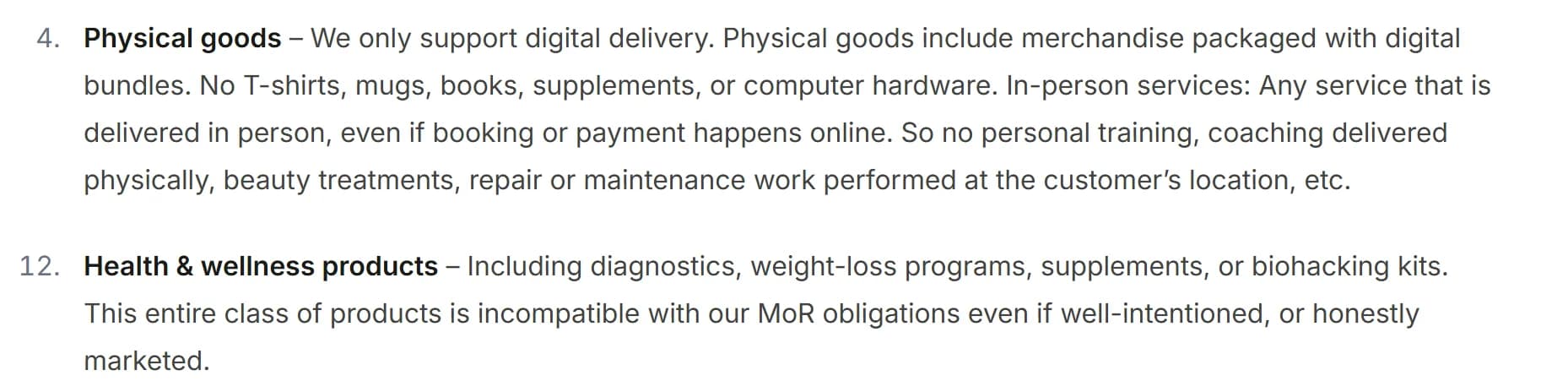
The others agree. Lemon Squeezy prohibits "physical goods of any kind" and "pharmacies, pharmaceuticals and nutraceuticals." Paddle says it isn't a fit if your primary offering is the sale of physical goods, and Polar says its services "are not designed for and should not be used by you" in that case. Gumroad, which also sells physical products, lists among its prohibited items "jewelry or beauty products" and "pseudo pharmaceuticals (including anti-aging pills, sexual stimulants, weight loss pills, diet pills)."
Why skincare and supplements get refused
For physical health and beauty products, nutra included, the decisive line is the same across processors. Shopify Payments puts it in its prohibited categories:
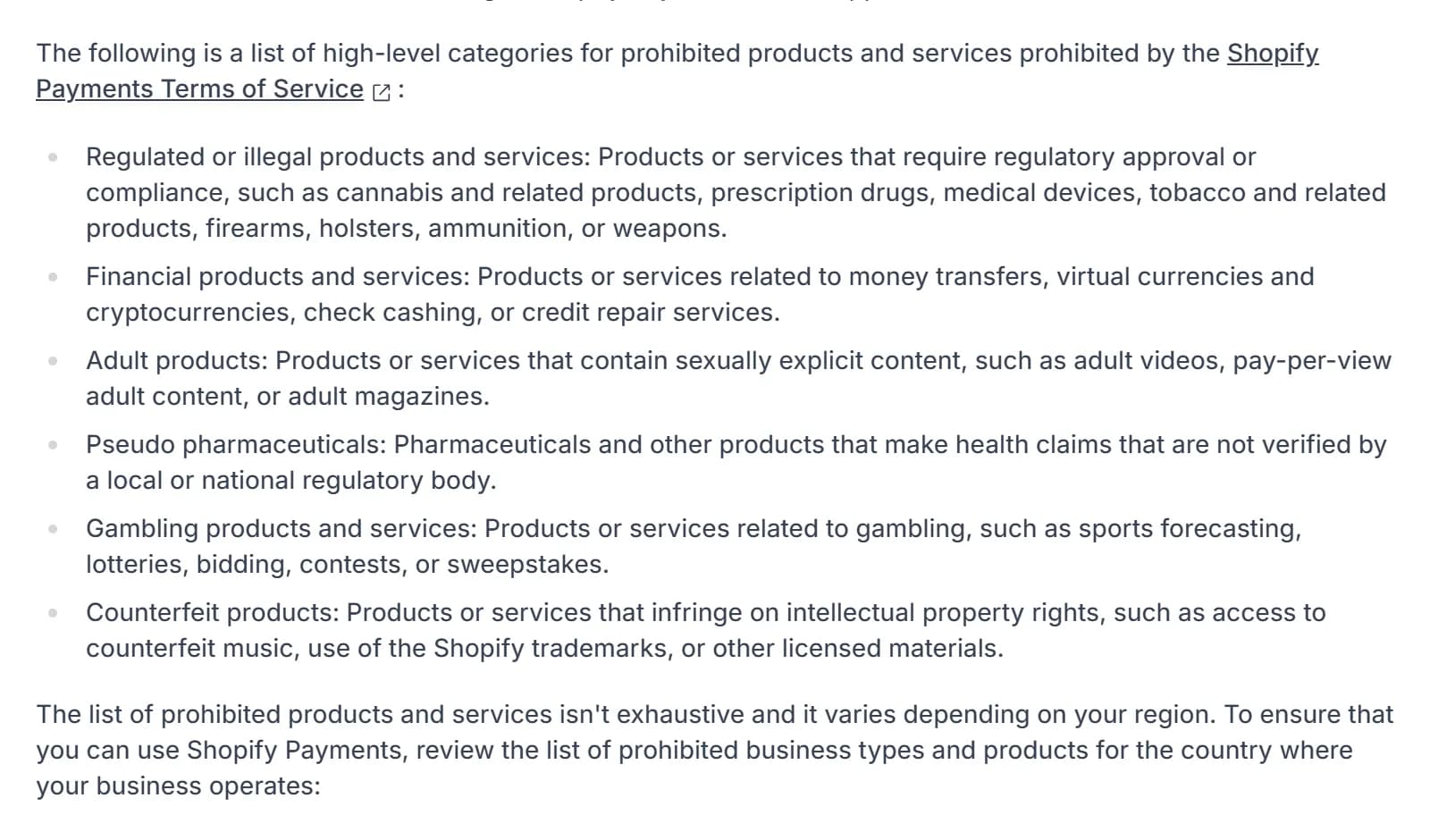
Stripe's version reads "pseudo-pharmaceuticals or nutraceuticals that are not safe or make harmful claims." Neither list says "cosmetics." In practice, the line has been drawn wider than the text.
In 2017 Shopify Payments cut off indie beauty stores in the US, Canada and Australia. Beauty Independent reported that skincare with "hyaluronic acid, retinol, glycolic acid, kojic acid and vitamin C, skin peels and teeth whiteners" had been put into "a high-risk pseudo pharmaceuticals category." Shopify's spokeswoman said its payment gateway "does not allow pharmaceuticals or pseudo pharmaceuticals." One founder answered: "Pseudo means fake and sham. We are by no means pharmaceuticals. We are cosmetics."
The same spring, a seller on UK Business Forums wrote that their Stripe account was suspended because "we sell 100% natural skincare but have the word brightening on one of our products that apparently we are making an unsupported medical claim." One word on one product.
Cosmetic or drug? The claim decides, not the jar
The reason "brightening" can sink a store is in US law, and the FDA explains it in plain terms:
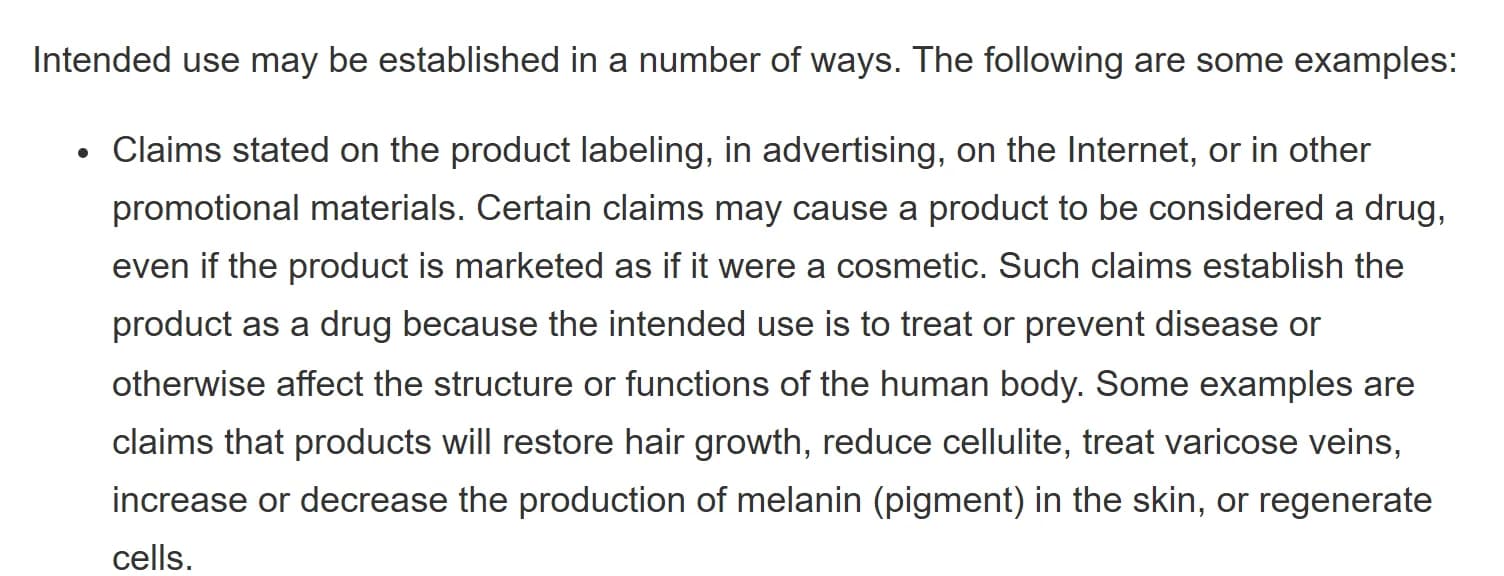
"Increase or decrease the production of melanin" is what a reviewer can read into brightening, lightening or whitening. "Regenerate cells" covers a good part of anti-aging copy. And some products are drugs whatever you write: in the US, sunscreens are regulated as over-the-counter drugs, which matters for anyone importing SPF products made for other markets.
Supplements have their own line. The FDA allows structure/function statements such as "supports the immune system," with substantiation and a notice to the FDA within 30 days of marketing. A disease claim, such as "reduces the pain and stiffness associated with arthritis," turns the product into a drug. Processors read your pages through the same lens, only faster and with less patience.
The paperwork exists too, but it's lighter for small sellers. In the US, the MoCRA cosmetics law exempts small businesses from facility registration and product listing, except for products used around the eyes, injected, taken internally or meant to alter appearance for more than 24 hours. In the EU, a cosmetic can be sold only if a "responsible person" in the EU is designated and the product is notified in the CPNP portal.
Before you apply: audit your listing
What a payment reviewer or an automated scan sees first is your product page. Before you open an account, go through it like the reviewer would:
- Claims. Remove treat, cure, heal, prevent, repair, regenerate, and pigment language such as brightening, lightening or whitening, unless you can back them as a regulated product. Describe what the product does cosmetically: cleanses, moisturizes, softens.
- Ingredients. Expect actives such as retinol, acids or vitamin C to draw attention, as they did in 2017, even when the product is a cosmetic.
- SPF. In the US an SPF claim makes it a drug; keep sunscreens out of a first launch unless you've checked the rules.
- Supplements. Structure/function wording only, with the FDA disclaimer, and nothing that names a disease.
- Store basics. Contacts, refund, shipping and cancellation policies; we cover what processors check in Merchant Account Declined or Closed.
None of this guarantees a yes. Shopify's own note says its prohibited list "isn't exhaustive and it varies depending on your region." But it removes the easy reasons for a no.
Checklist: what to do
Questions and answers
Can I accept credit card payments without a business?
Yes. Stripe lets you sign up as an individual, PayPal has business accounts for selling, and Shopify Payments asks for a supported country and an age of 18 or more. You still need ID, an address and a bank account, and your product must clear the processor's prohibited list.
How do I accept payments without a website?
Use payment links or invoices from Stripe or PayPal and send them by email, messenger or social media, or sell through a marketplace that handles checkout. The same rules and reviews apply as with a website.
Can I sell skincare with Stripe or Shopify Payments?
Cosmetics aren't banned by name, but both ban products with unverified health claims, and Shopify cut off beauty stores in 2017 over actives such as retinol and acids. Keep claims cosmetic, avoid treatment and pigment language, and be careful with SPF products.
Why was my supplement store refused?
Supplements fall under "pseudo pharmaceuticals" or "nutraceuticals" lines at most processors, and any disease claim makes them read as drugs. Merchants of record like Dodo and Lemon Squeezy refuse supplements outright.
Does Wise accept card payments for small businesses?
Not for new customers: Wise's card acceptance page says the feature "is currently unavailable to new Wise Business customers." Wise remains a multi-currency account for receiving transfers.
Author’s conclusion
The payments dead zone for small sellers is real, but it's narrower than it feels on day 1. You don't need a company to take your first card payment: an individual account, a payment link or a marketplace will do. What you can't skip is the product check, and for skincare and supplements that check happens on your words, not your paperwork.
My advice to affiliates launching their own product: start digital if you can, because a merchant of record solves payments, tax and disputes in one move. If it has to be physical, write the product page like a cosmetics lawyer would read it, and open a marketplace store as your backup before you need one.
Lu Discover, Editor-in-chief
Sources for this article
- reddit.com — r/smallbusiness: "Online sellers with no website - how do you accept payments?" (February 13, 2026) and the top answer on payment links, marketplaces and transfers
- reddit.com — r/ecommerce: "I want to start selling stuff online but I literally don't know anything help?" (November 1, 2025) and the reply on cashflow
- facebook.com — Laser Engraving for Beginners by VectorWitch group: "For those that sell online, how do you collect payment?" (June 13, 2025; 29 replies)
- support.stripe.com — Stripe Reserves FAQ (elevated dispute activity)
- docs.stripe.com — Stripe identity verification: business types individual and company, sole proprietorship, required information
- stripe.com — Stripe: How to accept payments online without a website (payment links)
- stripe.com — Stripe Prohibited and Restricted Businesses, last updated September 22, 2026
- help.shopify.com — Shopify Payments eligibility and prohibited businesses (18+, pseudo pharmaceuticals)
- paypal.com — PayPal: personal vs business accounts
- wise.com — Wise Business: accept card payments (unavailable to new customers)
- docs.dodopayments.com — Dodo Payments merchant acceptance policy (physical goods, health and wellness)
- docs.lemonsqueezy.com — Lemon Squeezy prohibited products
- paddle.com — Paddle: What am I not allowed to sell on Paddle
- polar.sh — Polar merchant of record acceptable use
- gumroad.com — Gumroad prohibited products (beauty products, pseudo pharmaceuticals)
- beautyindependent.com — Beauty Independent: Shopify dumps beauty e-commerce websites from its payment processing service (August 21, 2017)
- ukbusinessforums.co.uk — UK Business Forums: Advice needed, having Shopify/Stripe payment issues (2017)
- fda.gov — FDA: Is It a Cosmetic, a Drug, or Both? (Or Is It Soap?)
- fda.gov — FDA: Small Entity Compliance Guide on Structure/Function Claims
- fda.gov — FDA: Modernization of Cosmetics Regulation Act of 2022 (MoCRA)
- single-market-economy.ec.europa.eu — European Commission: cosmetics legislation, responsible person and CPNP
Related stories
 Guide
GuideIs a Payment Processor Legit? 6 Checks Before You Route a Single Transaction
 Guide
GuideMerchant Account Declined or Closed? What the Underwriter Saw, and Why Nobody Tells You
 Analysis
Comments
0 commentsNo comments yet.
Add a comment